
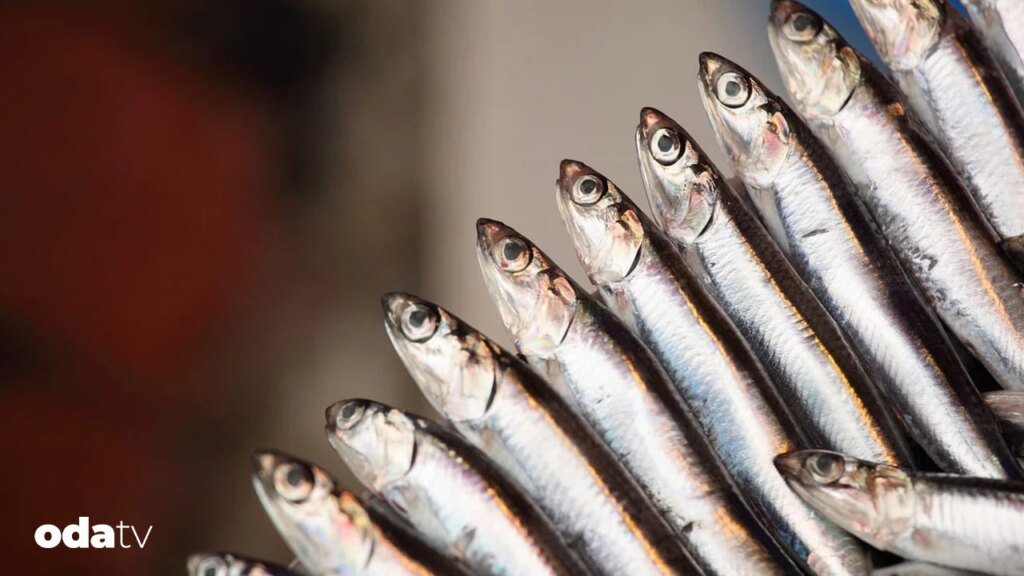
Hamsinin dünyadaki hikayesi I Hamsi kültürü
It wouldn’t be an overstatement to say that Mediterranean civilization soared on the back of a fish. In the lavish banquets of Rome, the culinary revolutions of the Renaissance kitchens, the pages of English literature, and today on the plates of Michelin star chefs, one hero remains: Hamsi.
You heard correctly.
The world’s most esteemed kitchens have been using hamsi both as a culinary powerhouse and as a cultural icon for centuries. Meanwhile, here it often seems its fate is already sealed: Clean it, coat it in flour and fry… That’s all.
Yet, the rest of the globe sees this tiny fish as an aroma that birthed civilizations.
IN ROME, ITS VALUE WAS ALMOST GOLD; THE EMPERORS HAD GARUM MADE WITH HAMSI
What was the Roman Empire’s most prized culinary weapon? It wasn’t the olives, the wine, or the wheat… It was Garum.
A liquid produced by fermenting hamsi, now seen as the precursor to Asian fish sauces.
While Pliny referred to garum as “disgusting yet exquisite”, the poet Martial called it “pride sauce”. In Portugal, the Tróia garum factory once churned out 35,000 liters per year. It was like an ancient Roman version of MSG—a glutamate explosion.
Our habit of thinking of hamsi as merely something to fry finds its roots right here.
Civilizations may have forgotten their garum… but we never learned its value.
DURING THE RENAISSANCE, HAMSİ TAKING CENTER STAGE
In 1455, an overlooked copy of Apicius was discovered in a monk’s library, igniting a Renaissance culinary revival. Centuries later, one of France’s first modern cookbooks (1536) introduced a new recipe: hamsi with herbed butter.
Indeed, it’s like a 500-year-old version of today’s butter board.
Yet here, the idea of serving hamsi with butter remains almost a luxury.
In Provence it pairs with tomatoes; in Italy, with various sauces; in Spain, it’s a tapas staple; and in Britain, it even appears as “Gentleman’s Relish” – making hamsi almost an aristocratic tradition.
In Shakespeare’s “Henry IV,” after enjoying chicken, Falstaff orders “anchovies and sack”.
This isn’t a trivial moment; it represents one of the era’s most beloved snacks.
Almost 179 years later, Samuel Pepys recorded in his diary, “I had hamsi for breakfast and was ill by night,” thereby etching hamsi into English history as a memorable figure.
Moreover, the final two recipes in the 1817 publication of Apicius Redivivus were: Hamsi toast and a hamsi toast served with a song.
Imagine an era where a simple fish toast was honored almost with ceremonial fanfare.
TODAY, WHAT’S HAPPENING WITH HAMSİ AROUND THE GLOBE?
Spaniards consume 2.7 kg of hamsi per capita. In Barcelona, the boquerones phenomenon attracts tourists. In Collioure, hamsi spreads are sold with the seriousness of a jeweler’s boutique. Michelin chefs add hamsi to pastries, sauces, and pâtés. In New York, hamsi pizza is making a comeback. Modern gastronomy now praises hamsi as a “powerful source of umami”.
Researchers in America have determined that hamsi contains 1,200 mg of glutamate in 3.5 oz.
This means you get a flavor punch equivalent to a bite of Roquefort cheese.
SO THE REAL QUESTION IS: “HAVE WE LOST HAMSİ?”
No.
Even as the rest of the world celebrates this small fish as a cornerstone of gastronomic art, we continue to view it merely as a seasonal catch. In contrast, few regions boast a hamsi culture as rich as Anatolia’s.
We’re accustomed to fermented products, love our spices, and eagerly embrace strong flavors.
All that’s missing is vision.
This little fish fed Rome; nurtured the Renaissance; and enriched Michelin kitchens.
Now, it’s our turn.
Perhaps to spark a culinary revolution we don’t need a novel ingredient but a rediscovery of an old tale — and that tale might just be called hamsi.
Odatv.com